How To Roast A Turkey in the Oven Perfectly

When I think of Thanksgiving and preparing to roast a turkey I am always drawn back to my childhood growing up in the Ozarks. My favorite song to sing on cold, November days around Thanksgiving was:
“Over the river and through the woods
To Grandmother’s house we go.
The horse knows the way to carry the sleigh
Through the wide and drifted snow.”
(Thanksgiving poem by Lydia Maria Child)
Jump to RecipeThis post may contain affiliate links. If you click on a link and then make a purchase, I may get a small commission from that sale, at no extra cost to you.
Dressing up, turning on the Macy’s Thanksgiving Day Parade, watching food being prepared in a small kitchen and the family table draped with Grandma’s best white tablecloth, being filled to the brim with bowls and dishes, fancy drinking glasses and a relish tray. The main attraction was a big golden turkey being placed on the table and everyone was excited to sit down and “dig in”!
The golden brown bird was more than just a main course—it was a symbol of togetherness, a reminder of traditions that stretched back through the decades. Even today, the aroma when you roast a turkey in the oven brings out the same warmth and anticipation that families have cherished for generations. This recipe holds to that simple tradition while using dependable steps that work for home cooks of any comfort level.

Roasting a turkey can feel overwhelming for someone preparing it for the first time, yet it is far more approachable than many expect. With the right preparation, a clear plan, and a little attention to detail, you can create a Thanksgiving turkey that is tender, flavorful, and evenly browned. A 14 lb turkey is a manageable size for most families and cooks well using this method. The same steps apply to larger birds, with adjustments for cooking time based on the pounds of turkey you are preparing.
This guide walks through everything from thawing to seasoning to checking the internal temperature. Each step is clear so you know why it matters and how it affects the final result. By the time you place the turkey on the table, you will have a golden brown roast that resembles the meals many Midwest families have enjoyed for decades.
Choosing and Thawing Your Turkey
Many home cooks buy a frozen turkey for Thanksgiving dinner because frozen birds store well, and grocery stores often have good sales throughout November. If you are cooking a frozen turkey, it needs several days to thaw safely in the refrigerator. A general rule of thumb is one day for every four pounds of turkey. A 14 lb turkey commonly requires three to four days.
Set the wrapped turkey in a shallow roasting pan inside the refrigerator to catch any liquid that escapes during thawing. If you forget to thaw it ahead of time, you can use the cold water method, although it requires more attention. Submerge the wrapped turkey in cold water and change the water every thirty minutes. Never use warm or hot water because that increases the risk of unsafe bacteria growth.
Once thawed, remove any packaging around the turkey. Look inside the turkey cavity and the neck end for a plastic bag containing the turkey neck and giblets. Most store turkeys include these items for gravy or broth. Some people cook them as part of their traditional meal, while others save them for stock. Either choice works.
Set the turkey on the counter for a short time so it can lose some of its chill. You do not want it fully warm, but letting it stand for a little while helps the breast meat and dark meat cook more evenly. This step can prevent dry meat near the breast area because the temperature difference between the outer layers and the thickest part of the thigh will not be as large.
Drying the Turkey for Better Roasting
Drying the turkey is one of the simplest ways to encourage crisp skin. Use paper towels to pat the entire surface dry. Remove any excess moisture from the turkey skin. If the turkey is too wet when it goes into the oven, the moisture will create steam and soften the exterior. This is also the point when you can check for leftover bits of feather or surface pieces that need trimming.
Drying also helps the seasoning adhere better. Butter or oil blends cling well when the skin is dry, which helps the herbs create a flavorful crust while the turkey roasts. Some Midwest families in earlier decades even let the turkey air-dry in the refrigerator overnight, uncovered, which can result in an even crispier skin.

Herb Butter and Seasoning
A good herb butter is one of the best ways to season a Thanksgiving turkey. It delivers flavor without the extra steps of a wet brine or dry brine and works consistently for cooks of all experience levels. The mix used in this recipe includes a stick of softened unsalted butter, salt, pepper, dried thyme, dried rosemary, and dried sage. These herbs appear in many roast turkey recipes from the region because they add warmth without overwhelming the natural flavor of the turkey.

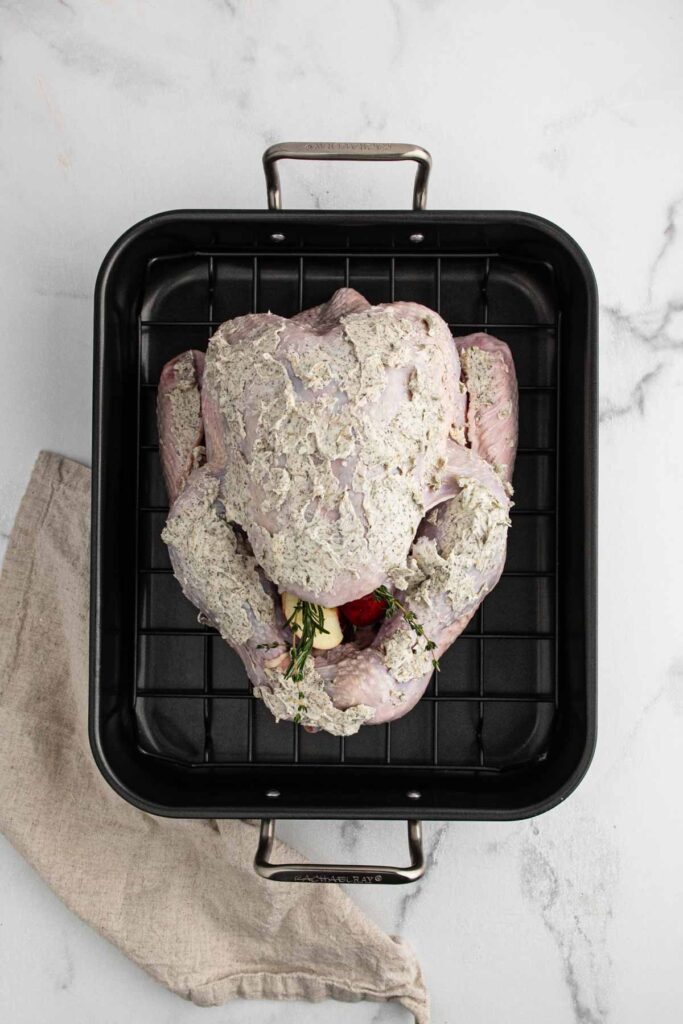
Mix the softened butter and dried herbs in a small bowl until they form a smooth butter mixture. If the butter is at room temperature, it blends easily. Spread the mixture over the turkey skin using your hands or a spatula. Coat as much of the surface as possible. The butter melts as the oven temperature rises and helps the skin turn golden brown.
Butter is the traditional choice for roast turkey. Some cooks prefer olive oil, especially when working with a larger bird like a 20-pound turkey, but butter gives a familiar flavor that pairs well with holiday dishes. The herbs help the turkey develop an aroma that fills the kitchen in a way many families recognize from past Thanksgiving mornings. Adding a bit of lemon zest to the butter mixture is an optional step that gives a subtle brightness to the roasted bird.

Flavoring the Turkey Cavity
Many people wonder what should be placed inside the turkey cavity. You do not need stuffing or a complicated mixture. Simple aromatics work well and allow steam to move through the inside of the turkey while it cooks.

Quarter an onion and an apple on a cutting board. Smash two garlic cloves to release their oils. Place these items inside the cavity of the turkey along with a few sprigs of fresh rosemary and fresh thyme. This mixture gives the turkey a gentle flavor and pleasant aroma. It also helps maintain moisture during roasting without making the meat heavy.
Do not pack the cavity tightly. Air needs to move around the ingredients. If the cavity is overfilled, the turkey cooks more slowly and unevenly. A modest amount is enough to provide flavor. For first-time cooks, adding the onion and apple in halves or quarters is a simple and effective way to ensure the flavor infuses the turkey without overwhelming it.
Preparing to Roast a Turkey
Once the cavity is filled, tuck the wings under the turkey. This helps prevent burning and keeps the turkey compact. Tie the legs together using kitchen twine or leave them tucked under the skin as they come packaged. Both methods are common.
Place the turkey breast side up in a roasting pan. If you have a roasting rack or wire rack, place the turkey on top of it. This keeps the turkey slightly lifted so heat can move underneath. Raising the turkey also keeps the bottom of the roasting pan from becoming overly wet.
When you roast a turkey, juices will drip to the bottom of the pan. These drippings create a base for the best turkey gravy. Some cooks place chopped vegetables or herbs beneath the turkey to add flavor to the drippings, although that is optional. Adjust the oven racks before you preheat the oven. The turkey should sit in the center of the oven so the heat reaches it evenly. If the turkey sits too high, the skin can darken too quickly before the inside cooks through.

The Recipe
Ingredients
- 14 lb turkey
- 1 stick of unsalted butter
- 1 teaspoon salt
- 1 teaspoon pepper
- 1 ½ teaspoon dried thyme
- 1 ½ teaspoon dried rosemary
- 1 ½ teaspoon dried sage
- 1 onion
- 1 apple
- 2 cloves of garlic
- Fresh thyme
- Fresh rosemary
Directions
- Dry the turkey skin with a paper towel to remove excess moisture.
- Place wings underneath the bird and tie legs together or leave under the skin as packaged.
- In a small bowl, cream together softened butter with salt, pepper, dried thyme, dried rosemary, and dried sage.
- Smear the butter mixture over the turkey skin with a spatula or your hands.
- On a cutting board, cut the onion and apple into four sections. Smash garlic cloves.
- Place the turkey in a roasting pan.
- Stuff the onion, apple, garlic, and fresh herb sprigs into the cavity of the turkey.
- Place the turkey into a preheated 350-degree oven for 3-3 1/2 hours.
- Remove from the oven and allow the turkey to rest for 20 minutes before serving.
Checking for Doneness
The turkey needs to reach an internal temperature of 165-170 degrees. Use an oven-safe meat thermometer or an instant-read thermometer and insert it into the thickest part of the thigh without touching the bone. Checking the internal temperature ensures your turkey is safe to eat and helps prevent dry meat in the breast.
Carving and Serving
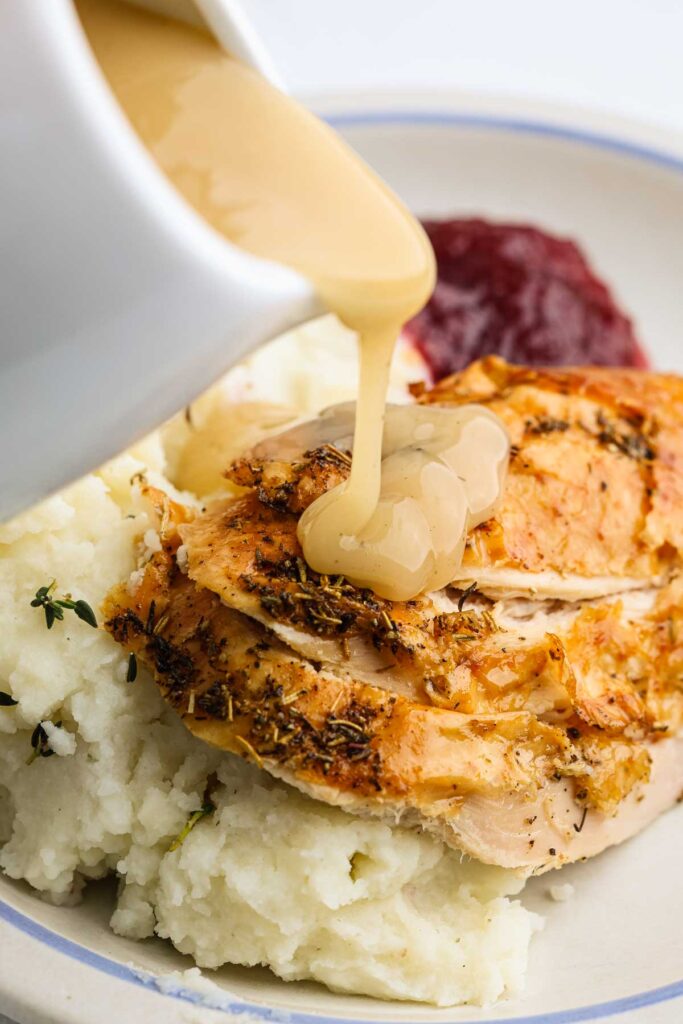
Remove the legs first, then slice the breast meat. Arrange the slices on a platter, breast meat toward the center and dark meat around the edges. Serve with classic sides like mashed potatoes, green beans, and gravy made from the turkey drippings. Leftover turkey can be stored in an airtight container for sandwiches, soups, or casseroles.
For a more authentic, vintage-inspired touch, consider serving rolls, cranberry sauce, and a simple vegetable side that reflects the Midwest Thanksgiving table of decades past. These small touches bring out the nostalgia while still keeping the meal approachable for modern home cooks.

Why This Recipe Works
This method uses simple steps that align with how many Midwest families prepared Thanksgiving meals for decades. The combination of herb butter and aromatics balances flavor without covering the natural taste of the turkey. The oven temperature gives the turkey crisp skin, and resting the turkey ensures juicy meat.
This recipe also adapts easily to larger turkeys or electric roasters without changing the preparation. By following these steps, even a first-time turkey cook can achieve a golden brown bird with flavorful, tender meat that will impress the whole table.
Looking for a delicious side dish to join this perfectly cooked turkey? Try our unique Loaded Sweet Potato Casserole!

How To Roast A Turkey in the Oven Perfectly
Ingredients
- 14 lb turkey
- 1 stick unsalted butter softened
- 1 teaspoon salt
- 1 teaspoon pepper
- 1 ½ teaspoons dried thyme
- 1 ½ teaspoons dried rosemary
- 1 ½ teaspoons dried sage
- 1 onion
- 1 apple
- 2 garlic cloves
- Fresh thyme
- Fresh rosemary
Instructions
- Pat the turkey dry with a paper towel to remove excess moisture from the skin.
- Tuck the wings underneath the bird. Tie the legs together, or leave them tucked under the skin if that’s how the turkey was packaged.
- In a small bowl, cream together the softened butter, salt, pepper, dried thyme, dried rosemary, and dried sage.
- Spread the butter mixture all over the turkey skin using a spatula or your hands.
- On a cutting board, cut the onion and apple into four sections each. Smash the garlic cloves.
- Place the turkey in a roasting pan.
- Stuff the onion, apple, garlic, and fresh herb sprigs into the cavity.
- Roast the turkey in a preheated 350°F oven for 3 to 3 ½ hours, or until it reaches a safe internal temperature.
- Remove from the oven and allow the turkey to rest for at least 20 minutes before carving and serving.
Notes
- Be sure to let the turkey rest so the juices settle.
- For extra flavor, add additional fresh herbs around the roasting pan.
- You can use the pan drippings to make a simple turkey gravy.